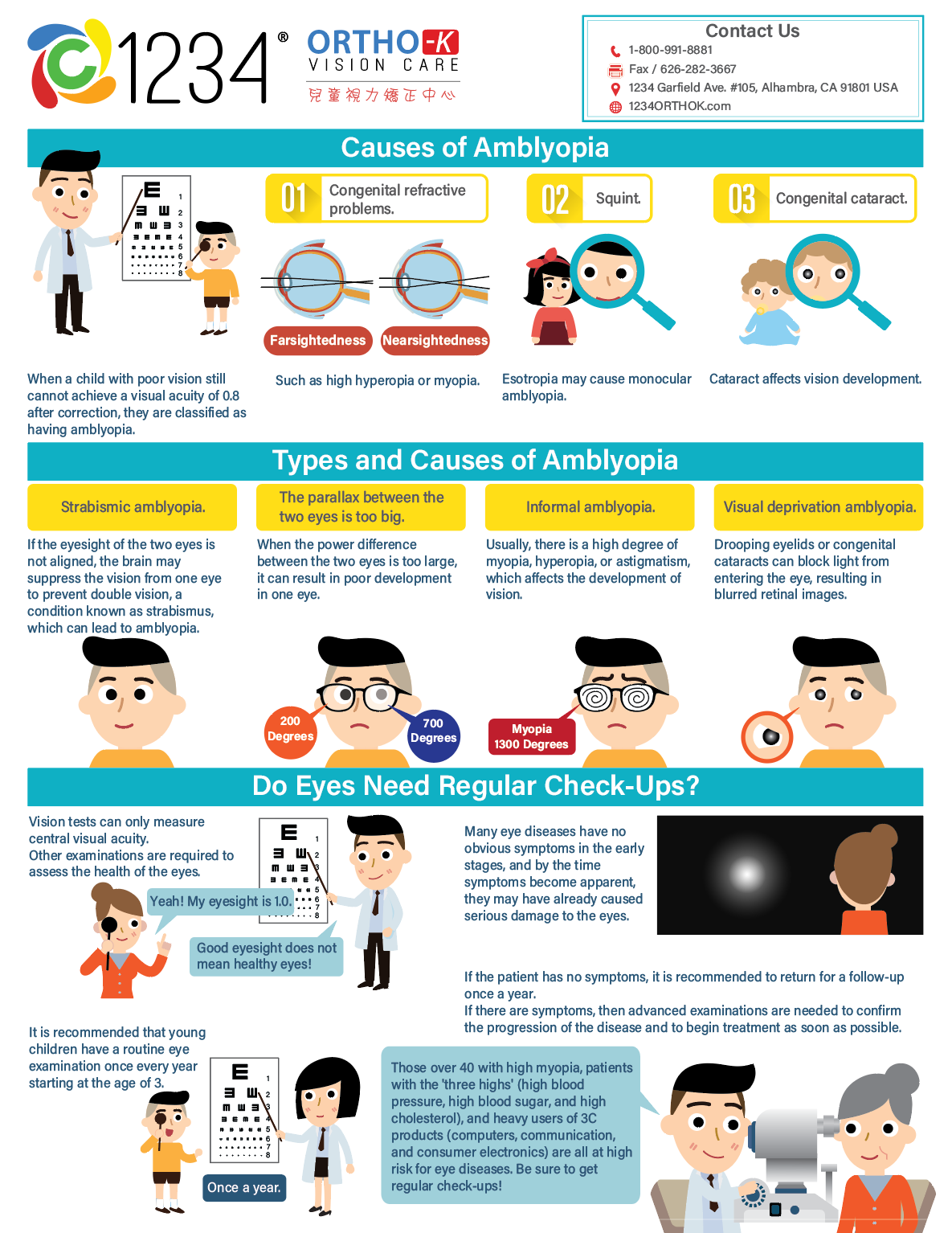
Bring your child for a first eye exam at age 3, then once a year.
When a child doesn’t pass a school vision screening
Reason for the visit: the child did not pass a vision screening at school.
Signs to watch for: looking at the TV or the board out of the corner of the eye, or tilting the head to look at the TV or other things.
Possible causes: refractive errors (nearsightedness, farsightedness, astigmatism), strabismus, amblyopia, childhood cataracts, and retinal disease.
What the exam includes:
- A cover test of how the eyes line up, to check for strabismus
- Computerized refraction before and after the eye’s focusing muscles are relaxed, to check for refractive errors
- Vision testing before and after the focusing muscles are relaxed, with and without corrective lenses, to check for amblyopia
- A slit-lamp exam of the lens after the pupils are dilated, to check for cataracts
- An exam of the retina with an ophthalmoscope after the pupils are dilated, to check for retinal disease
Why does my child need dilating eye drops?
Children’s focusing muscles (the ciliary muscles) are strong and react quickly, so we use drops that relax them. That way, the prescription we measure is accurate. These drops also widen (dilate) the pupils. Checking the prescription alone only requires relaxing the focusing muscles, not dilating the pupils, but no eye drop available today does one without the other.
Dilated pupils also let us examine the back of the eye more completely, including the retina, the vitreous and the optic nerve.
Do the drops have side effects?
The drops may sting a little, and things up close will look blurry for a while. Because the pupils are wider, bright light may feel uncomfortable. Take extra care with reading and writing, and if your child has a test coming up, please tell our staff first. The effects wear off in about eight hours.
What is amblyopia, and how is it treated?
Amblyopia (“lazy eye”) means vision that glasses cannot correct to normal (below 0.7 on the decimal scale, about 20/30), even though a detailed eye exam finds nothing physically wrong with the eye. The most important period for vision development is from birth to about age four or five.
While vision develops, the eyes and the brain’s visual centers need clear light and images to develop fully. A high refractive error (high nearsightedness, farsightedness or astigmatism) keeps light from focusing properly in the eye, which can cause amblyopia. Other conditions during this period, such as strabismus, a drooping eyelid, cataracts or corneal scarring, can also block a clear image and lead to amblyopia.
Treating amblyopia
Treatment depends on the cause. Amblyopia caused by a refractive error is treated first with glasses of the right strength, which correct the error and encourage vision to develop. Amblyopia caused by a congenital cataract or a drooping eyelid needs surgery first, to remove the cataract or correct the eyelid. Amblyopia caused by strabismus is treated with surgery or glasses, depending on the strabismus.
What is strabismus, and how is it treated?
Strabismus means the two eyes are not aligned and point in different directions. An eye may turn inward, outward, up or down. Most cases have no known cause, but in children, some brain conditions can cause strabismus, such as cerebral palsy, Down syndrome, microcephaly and brain tumors. Eye conditions that affect vision, such as cataracts or an eye injury, can also cause it.
Treatment: mild cases may be treated with prism lenses; more severe cases may need surgery to adjust the strength and position of the eye muscles so that the eyes line up.
Causes of amblyopia
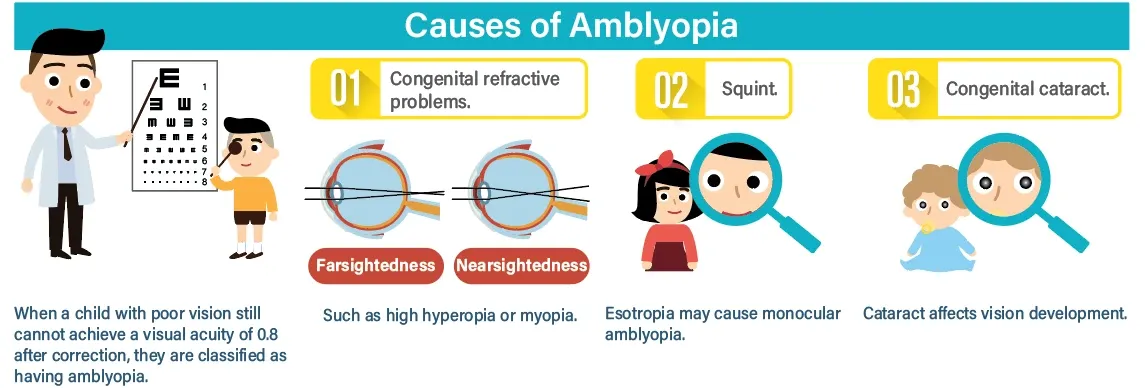
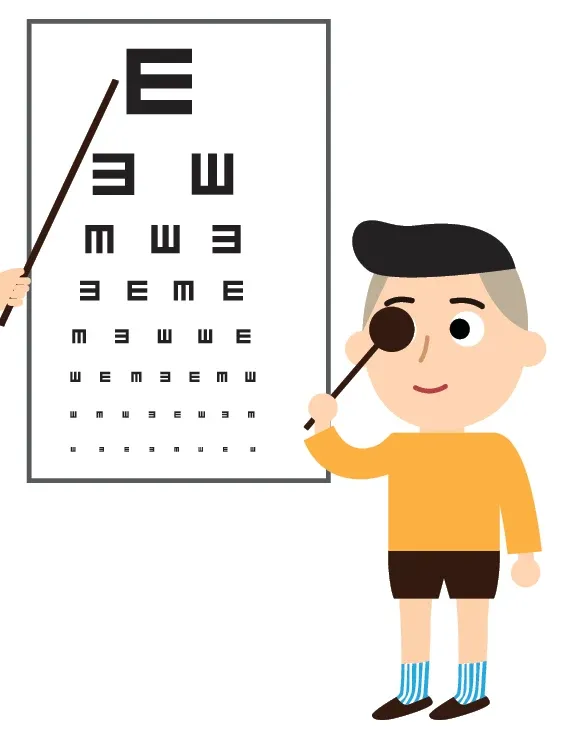
When a young child’s vision still cannot reach 0.8 (on the decimal scale) with glasses or contact lenses, the child has amblyopia.
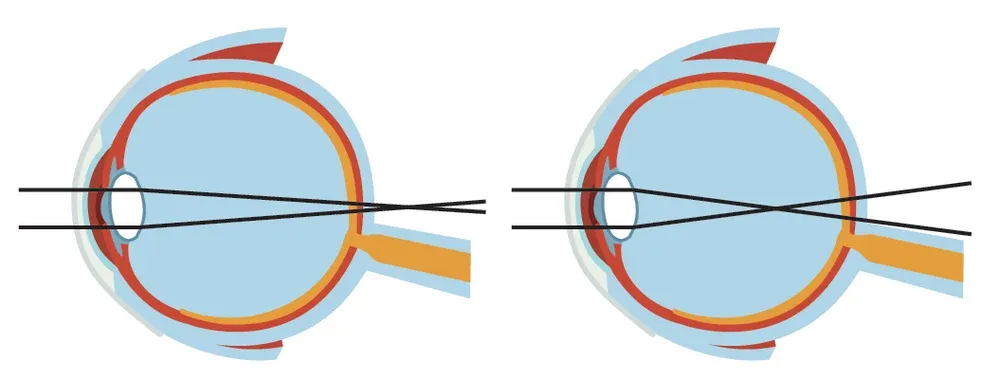
Congenital refractive problems, such as high farsightedness or nearsightedness
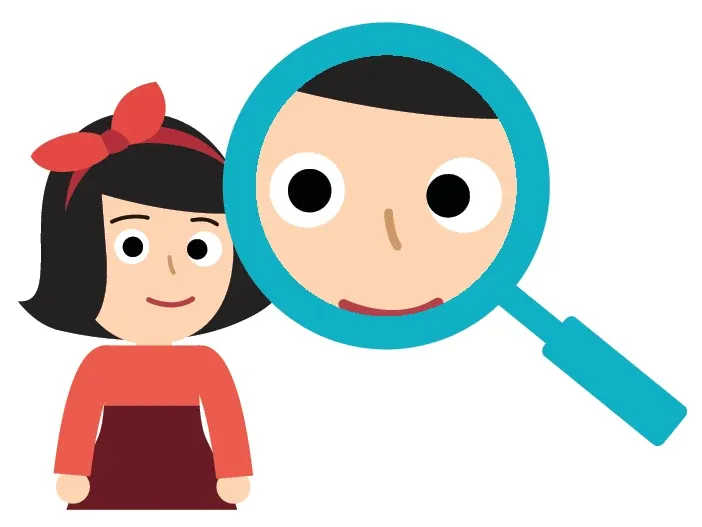
Strabismus (a turned eye): an eye that turns inward may cause amblyopia in that eye
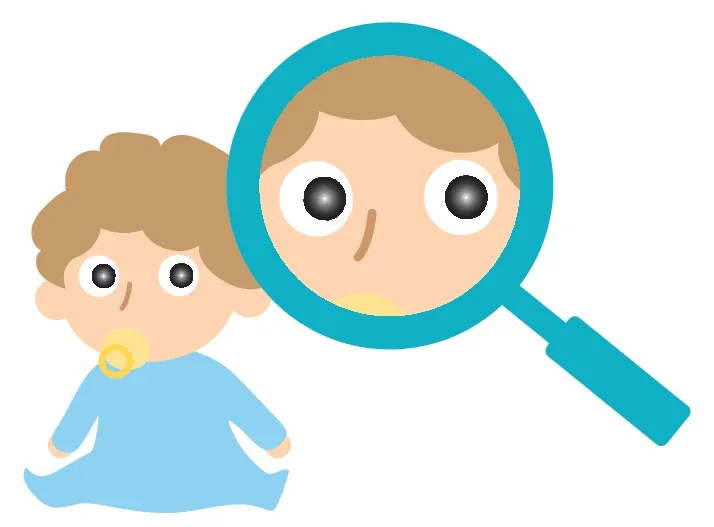
Congenital cataract, which affects how vision develops
Types of amblyopia
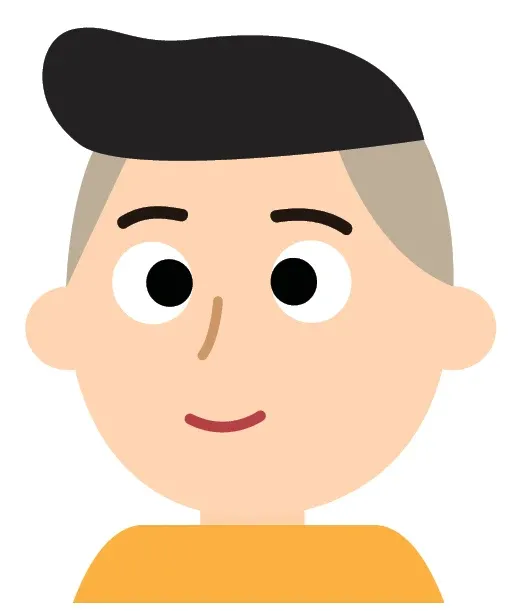
Strabismic amblyopia
When the two eyes are not lined up, the brain suppresses the turned eye to avoid double vision, and this leads to amblyopia.
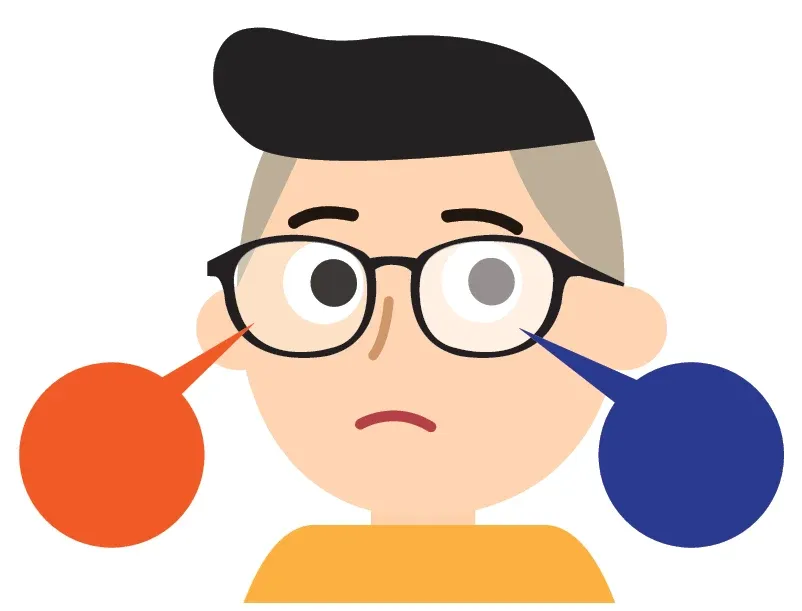
A large difference between the two eyes
When the two eyes’ prescriptions are very different, vision in one eye may not develop well.
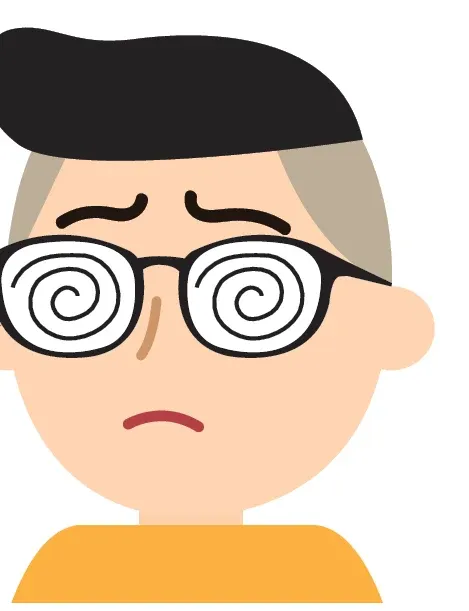
Refractive amblyopia
Usually caused by high nearsightedness, farsightedness or astigmatism, which affects how vision develops.
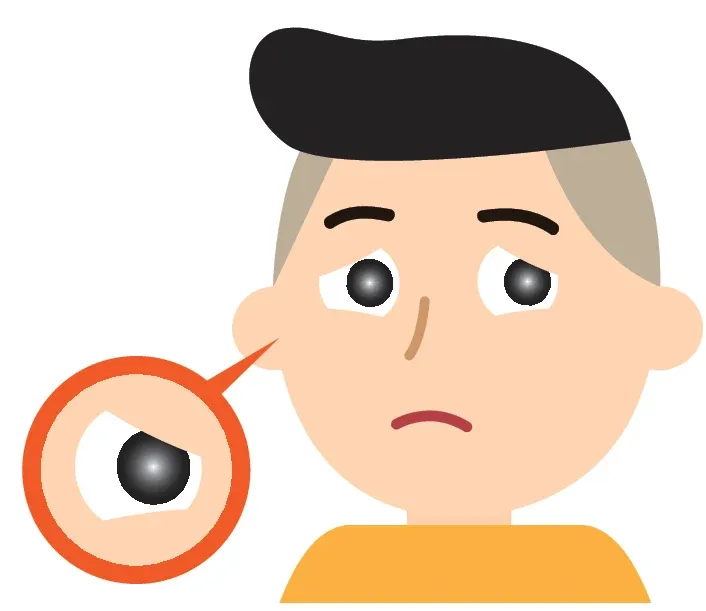
Visual deprivation amblyopia
A drooping eyelid or a congenital cataract blocks light from entering the eye, so the image on the retina is blurry.
Do eyes need regular check-ups?
A vision test only measures central vision. Other exams are needed to check the health of the eyes. Good eyesight does not mean healthy eyes.
Many eye diseases have no obvious symptoms at first. By the time symptoms appear, they may already have seriously damaged the eyes.
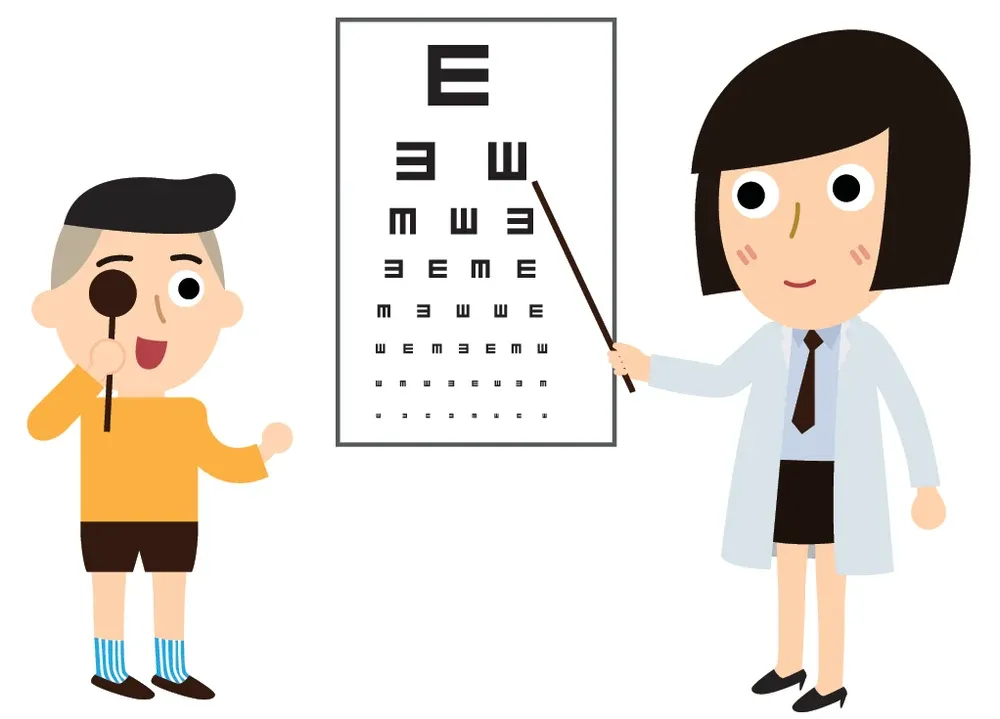
We recommend a routine eye exam once a year for young children, starting at age 3.
If there are no problems, come back once a year for a check-up. If there are, more advanced exams are needed to confirm how the condition is progressing and to start treatment as early as possible.
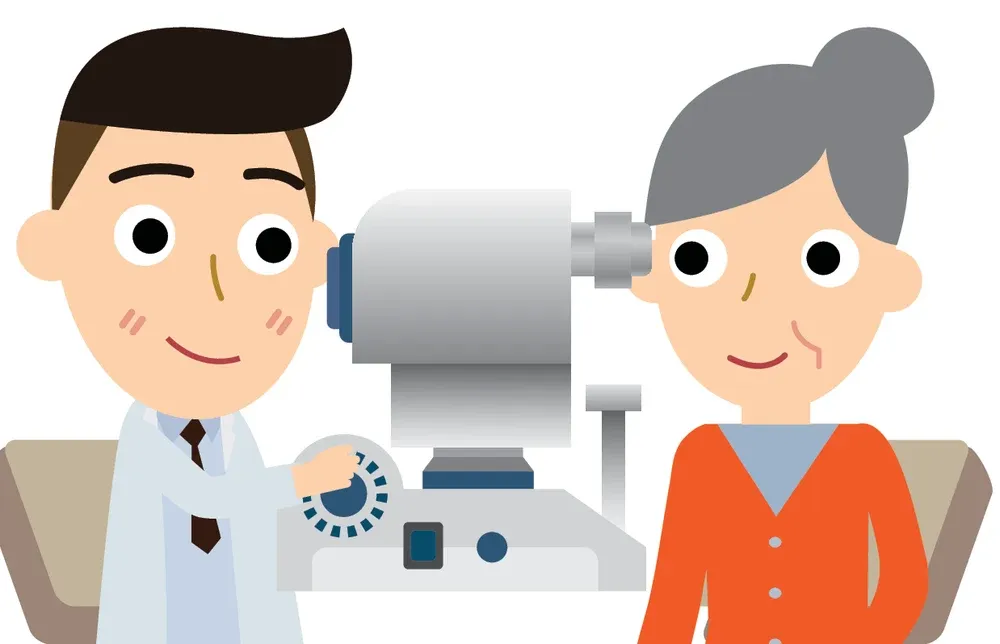
People over 40, people with high nearsightedness, people with high blood pressure, high blood sugar or high cholesterol, and heavy users of computers, phones and other screens are all at high risk of eye disease. Be sure to have regular check-ups.